Massimo Pigliucci’s How to Be a Stoic: Using Ancient Philosophy to Live a Modern Life (2017) is both an invitation and a manual for living a more thoughtful, disciplined, and meaningful life through the lens of ancient Stoicism. Written with clarity, warmth, and a scientist’s respect for rational inquiry, the book bridges the gap between the dusty scrolls of antiquity and the self-help shelves of the modern bookstore. Yet, as with any synthesis of ancient wisdom and modern psychology, the book succeeds best when it stays close to its Stoic roots—and falters slightly when it stretches those roots to accommodate contemporary relativism.
About the Author
Massimo Pigliucci is a professor of philosophy at the City College of New York, with doctorates in both genetics and philosophy. Born in Rome, he initially trained as a biologist before transitioning into philosophy, focusing on ethics, philosophy of science, and Stoicism as a practical way of life. Pigliucci is a leading voice in modern Stoic circles, contributing to Stoicism Today and co-organizing Stoicon, an annual gathering for Stoic practitioners. His background gives him a rare blend of scientific skepticism and classical erudition—a combination that serves this book particularly well.
Overview of the Book
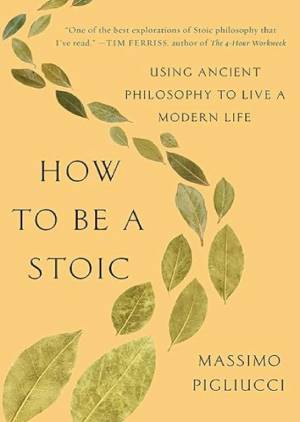
How to Be a Stoic is structured around a personal dialogue between Pigliucci and the ancient Stoic philosopher Epictetus. Each chapter explores a key aspect of Stoic teaching, from the dichotomy of control to the cultivation of virtue, the acceptance of fate, and the social obligations inherent in Stoic ethics. Pigliucci uses this conversational format—imagining how Epictetus might respond to modern dilemmas—to make the ancient teachings accessible to readers who might otherwise find them abstract or austere.
The book opens with Pigliucci’s discovery of Stoicism during a time of personal questioning. He recalls stumbling upon Epictetus’s Enchiridion, a short manual of moral instruction that became a practical guide for him. This personal touch sets the tone for the rest of the book: not academic detachment, but applied philosophy—Stoicism lived rather than lectured.
From there, Pigliucci builds the reader’s understanding step by step. He outlines the Stoic belief that while we cannot control external events, we can always control our judgments, choices, and attitudes toward them. This central insight—the “dichotomy of control”—is the thread that weaves through the entire book. It becomes the lens through which he examines anxiety, anger, relationships, loss, and even politics.
What the Reader Will Learn
A reader new to Stoicism will find this book a solid primer on the key principles of the philosophy. Pigliucci covers:
- The Dichotomy of Control: Understanding the difference between what we can change and what we must accept.
- Virtue as the Only True Good: How courage, justice, wisdom, and temperance form the foundation of a well-lived life.
- Living in Accord with Nature: What it means to align one’s actions with rational and social nature.
- Emotions and Reason: The Stoic view that emotions are judgments, not uncontrollable impulses.
- Practical Exercises: Journaling, reflection, and Socratic questioning as tools for self-improvement.
Pigliucci also contrasts Stoicism with other philosophical traditions, including Buddhism, existentialism, and Christianity, helping readers see how Stoicism fits within the broader landscape of moral thought. His explanations are grounded in modern psychology and neuroscience, giving Stoicism an updated, empirical credibility.
However, what makes the book especially engaging is Pigliucci’s willingness to test Stoicism against real-life situations. He writes about facing anger while commuting in New York City traffic, handling grief, and managing interpersonal conflict. These examples demystify Stoic practice and show that philosophy is not just for monks or scholars but for anyone seeking a steadier life.
Strengths of the Book
Pigliucci’s greatest strength lies in his ability to translate ancient ideas into modern language without diluting their meaning. His background in science allows him to approach Stoicism as both a moral framework and a practical discipline rooted in reason. He acknowledges where Stoic cosmology—such as belief in a providential universe—might conflict with modern secular thought, yet he finds ways to reinterpret it symbolically rather than discard it outright.
His writing style is clear, personable, and conversational, which makes the book accessible even to those without a philosophical background. The imagined conversations with Epictetus add charm and human warmth, preventing the text from feeling didactic. Moreover, Pigliucci’s honesty about his own struggles with practicing Stoicism adds authenticity. He does not present himself as a master but as a fellow traveler learning alongside the reader.
The inclusion of practical exercises—reflecting on daily challenges, practicing gratitude, examining impulses before reacting—makes How to Be a Stoic as much a workbook as a philosophical treatise. For many readers, this applied dimension will be the most valuable part.
Weaknesses & Limitations
Despite its many strengths, the book has a few shortcomings. Pigliucci sometimes over-intellectualizes Stoicism, leaning too heavily on modern academic language and comparative philosophy. For example, his discussions of Buddhist parallels, while insightful, occasionally distract from the central Stoic message. Readers seeking a purely Stoic text may find these digressions less relevant.
In addition, his rationalist reinterpretation of certain Stoic ideas—such as the Logos or the divine order of the universe—may not sit well with traditionalists. Pigliucci, as a secular humanist, tends to downplay Stoicism’s spiritual dimensions, presenting it more as a psychological framework than a way of aligning oneself with a cosmic order. While this makes Stoicism palatable to modern skeptics, it risks stripping the philosophy of its metaphysical depth.
Finally, some readers may wish for more critical engagement with Stoic shortcomings—for instance, its sometimes austere approach to emotion, or the difficulty of reconciling Stoic acceptance with moral activism. Pigliucci touches on these tensions but tends to resolve them too neatly.
Evaluation
Information and Insight (9/10):
Pigliucci offers a thorough and accurate overview of Stoicism, enriched with historical context and modern application. The book is informative without being overwhelming.
Readability (8/10):
The prose is clear and engaging, though occasionally academic in tone. The dialogue format with Epictetus helps maintain reader interest.
Usefulness for Beginners (9/10):
As a gateway into Stoic thought, the book is excellent. It balances theory with practice, encouraging readers to live Stoicism rather than merely read about it.
Overall Rating: 8.5/10
Final Thoughts
How to Be a Stoic stands as one of the most approachable introductions to Stoic philosophy available today. It neither romanticizes the ancient world nor panders to modern self-help simplicity. Instead, Pigliucci builds a bridge between Epictetus’s dusty classroom and our digital age—where distraction, stress, and moral confusion abound.
For anyone curious about Stoicism—not as a historical curiosity but as a living philosophy—this book offers a roadmap. It may not be the final word on the subject, but it is an excellent place to begin.